
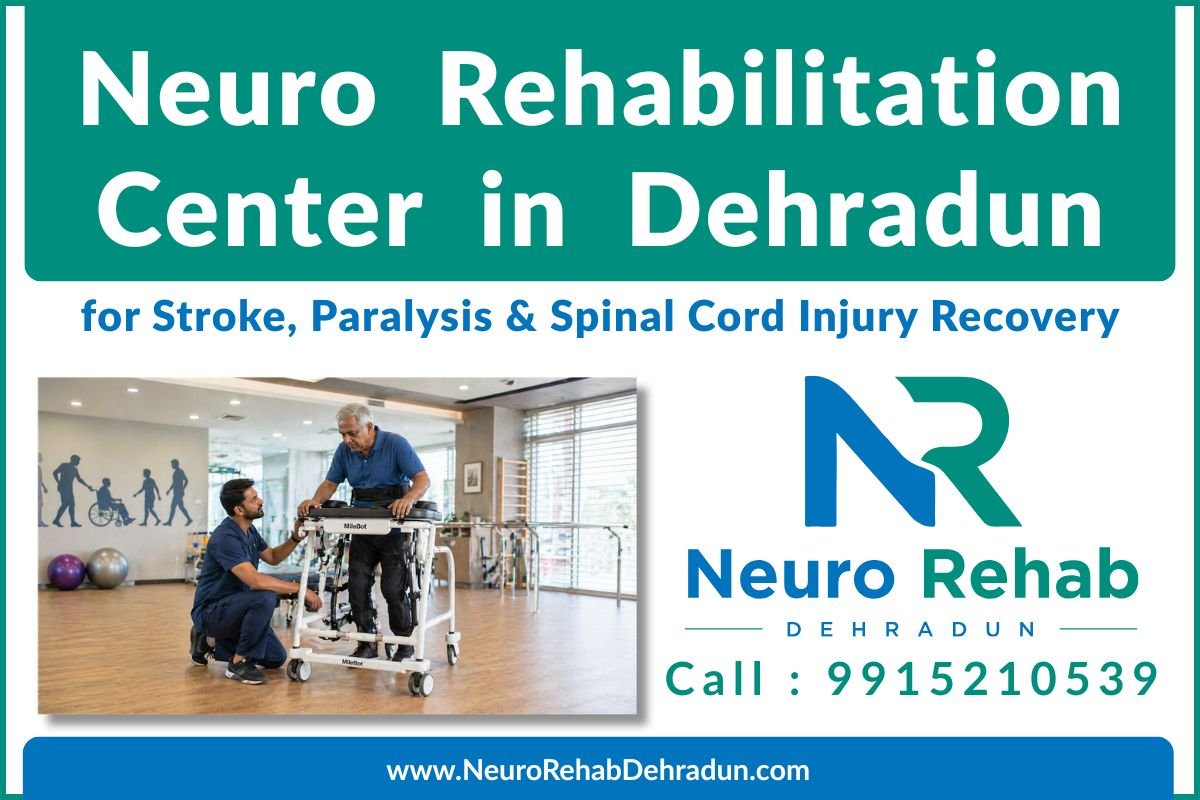
Best Neuro Rehabilitation Center in Dehradun: Advanced Stroke, Paralysis & Neurological Recovery Support
Table of Contents
Neurological conditions such as stroke, paralysis, spinal cord injury, brain injury, and neurological mobility disorders can deeply affect a person’s movement, independence, confidence, and quality of life. Recovery is often physically and emotionally challenging — not only for patients, but also for their families.
Choosing the right neuro rehabilitation center plays a major role in determining how effectively a patient regains mobility, strength, balance, coordination, and functional independence.
If you are searching for the best neuro rehabilitation center in Dehradun, it is important to understand that successful rehabilitation is not simply about routine physiotherapy sessions. True neurological recovery requires structured rehabilitation planning, personalized therapy, neuroplasticity-based exercises, patient motivation, family support, and long-term recovery management.
What is Neuro Rehabilitation?
Neuro rehabilitation is a specialized medical rehabilitation process designed to help individuals recover from neurological conditions affecting the brain, spinal cord, nerves, and muscles.
The primary goal of neuro rehabilitation is to improve a patient’s physical function, movement control, balance, coordination, speech, and ability to perform daily activities independently.
Modern neuro rehabilitation combines multiple therapies, including:
- Neuro physiotherapy
- Functional movement training
- Balance and gait rehabilitation
- Strengthening exercises
- Mobility retraining
- Cognitive rehabilitation
- Post-stroke rehabilitation
- Paralysis recovery support
Unlike general physiotherapy, neuro rehabilitation focuses specifically on retraining the nervous system and improving brain-body coordination.
Why Choosing the Right Neuro Rehabilitation Center Matters
Recovery after neurological injury is rarely simple or predictable. Two patients with similar stroke severity may experience completely different recovery outcomes.
A specialized neuro rehabilitation center helps patients recover more effectively through structured and personalized therapy approaches.
The right rehabilitation center can help:
- Improve walking ability and mobility
- Restore balance and coordination
- Enhance muscle strength
- Improve hand and limb function
- Support paralysis recovery
- Reduce long-term disability
- Improve confidence and independence
- Prevent secondary complications
Experienced rehabilitation specialists understand that neurological recovery is not only physical — emotional and psychological support also play an important role.
Conditions Treated Under Neuro Rehabilitation
A quality neuro rehabilitation center usually provides rehabilitation support for:
- Stroke rehabilitation
- Paralysis treatment
- Spinal cord injury rehabilitation
- Brain injury rehabilitation
- Parkinson’s disease rehabilitation
- Pediatric neuro rehabilitation
- Post-surgery neurological rehabilitation
- Neurological balance disorders
- Mobility dysfunction
- Muscle weakness after neurological injury
Each neurological condition requires individualized rehabilitation planning based on the patient’s condition, mobility level, recovery stage, and overall health.
Why Some Stroke Patients Recover Faster Than Others
One of the biggest misconceptions about neurological recovery is that all patients improve at the same speed. In reality, recovery outcomes depend on several hidden factors that many families do not fully understand.
Brain Damage Location Matters
The location of brain injury significantly affects recovery patterns.
For example:
- Left-brain stroke may affect speech and language
- Right-brain stroke may affect balance and spatial awareness
- Some patients struggle more with movement
- Others struggle with memory, cognition, or emotions
This is why rehabilitation plans should never be identical for every patient.
Early Rehabilitation Changes Outcomes
The first few weeks after stroke or neurological injury are often considered extremely important for recovery.
Early rehabilitation may help:
- Improve mobility faster
- Prevent muscle stiffness
- Reduce balance loss
- Improve coordination
- Support better neurological adaptation
Delayed rehabilitation can lead to muscle tightness, weakness, reduced movement, and slower progress.
Family Involvement Plays a Major Role
Families can either support or unintentionally slow recovery.
Common challenges include:
- Overprotecting the patient
- Reducing patient independence
- Inconsistent home exercises
- Emotional stress within the family
Successful rehabilitation often requires active participation from both therapists and caregivers.
Mental Health Affects Recovery
Many stroke and paralysis patients experience:
- Fear of falling
- Anxiety
- Frustration
- Depression
- Loss of confidence
These emotional factors directly affect therapy participation and recovery consistency.
Hidden Complications Families Often Ignore During Rehabilitation
Many rehabilitation articles only focus on improvement but rarely discuss complications that can silently slow recovery.
Shoulder Problems After Stroke
Improper handling of weak arms can lead to shoulder instability and pain.
Families should avoid:
- Pulling the affected arm
- Incorrect lifting techniques
- Unsupported arm positioning
Muscle Tightness & Contractures
Lack of movement can cause permanent stiffness in joints and muscles.
Regular guided movement and stretching are important to maintain flexibility.
Swallowing Difficulties
Some neurological patients silently develop swallowing problems, increasing the risk of choking and lung infection.
Warning signs may include:
- Coughing while eating
- Difficulty swallowing water
- Voice changes after eating
Bedsores in Low-Mobility Patients
Patients with limited movement are at risk of pressure sores.
Proper positioning, movement, and skin care become essential during long-term rehabilitation.
Emotional Burnout During Recovery
Recovery is often slow and mentally exhausting.
Patients sometimes:
- Lose motivation
- Refuse therapy
- Feel emotionally defeated
Structured rehabilitation support helps patients maintain consistency and confidence.
Key Features of the Best Neuro Rehabilitation Center in Dehradun
Specialized Neuro Rehabilitation Focus
Dedicated neuro rehabilitation centers focus specifically on neurological recovery rather than general physiotherapy alone.
Personalized Rehabilitation Programs
Every neurological patient has unique challenges and recovery goals.
Customized rehabilitation programs improve therapy effectiveness and patient outcomes.
Experienced Rehabilitation Team
Skilled rehabilitation specialists understand neurological movement patterns, balance deficits, gait problems, and recovery limitations.
Functional Recovery Approach
Modern rehabilitation focuses on practical daily functions such as:
- Walking safely
- Standing balance
- Hand movement
- Stair climbing
- Bed mobility
- Transfers and sitting balance
Advanced Neuro Rehabilitation Techniques
Modern therapy may include:
- Functional movement training
- Neuro physiotherapy
- Gait training
- Balance rehabilitation
- Strength training
- Coordination exercises
- Mobility retraining
Patient-Centered Care
Recovery is often emotionally difficult. A patient-focused rehabilitation approach improves confidence, participation, and long-term motivation.
Myth vs Reality About Stroke & Paralysis Recovery
Myth: Recovery Stops After 6 Months
Reality:
Many patients continue improving for months or even years with structured rehabilitation.
Myth: Physiotherapy Alone is Enough
Reality:
Neurological recovery may also require:
- Cognitive rehabilitation
- Speech therapy
- Occupational therapy
- Emotional support
- Family involvement
Myth: Bed Rest Helps Faster Recovery
Reality:
Excessive inactivity may worsen weakness, stiffness, and balance problems.
Myth: All Stroke Patients Recover Similarly
Reality:
Recovery depends on:
- Brain injury location
- Therapy timing
- Age
- Overall health
- Patient motivation
- Rehabilitation consistency
Myth: Online Exercises Work for Everyone
Reality:
Generic YouTube exercises may not suit every neurological patient and sometimes worsen imbalance or fatigue.
When Standard Rehabilitation Strategies Fail
Not all rehabilitation progresses smoothly. Experienced therapists understand that recovery plateaus are common.
Recovery Plateaus
Some patients improve quickly initially but later experience slow progress.
This does not always mean recovery has stopped.
Therapists often modify:
- Exercise intensity
- Movement patterns
- Functional goals
- Therapy sequencing
Overtraining Can Backfire
Too much repetitive therapy may:
- Increase fatigue
- Reduce motivation
- Cause nervous system overload
Balanced rehabilitation is often more effective than aggressive exercise schedules.
Small Functional Gains Matter
In neurological recovery, even small improvements can be life-changing.
Examples include:
- Sitting independently
- Better grip strength
- Safer walking
- Standing balance
- Improved transfers
Functional independence often matters more than dramatic exercise performance.
Advanced Neuro Rehabilitation Approaches Used in Modern Recovery Programs
Modern neuro rehabilitation is increasingly based on neuroscience and neuroplasticity principles.
Neuroplasticity-Based Rehabilitation
The brain has the ability to form new neural connections through repetitive and meaningful practice.
This process is called neuroplasticity.
High-quality repetition often matters more than simply increasing exercise quantity.
Task-Specific Functional Training
Patients practice real-world movements such as:
- Walking
- Reaching
- Sitting
- Standing
- Stair climbing
Functional training improves practical independence.
Gait Re-Education
Walking retraining focuses on:
- Weight shifting
- Balance control
- Foot placement
- Fall prevention
- Coordination improvement
Constraint-Induced Movement Therapy (CIMT)
This advanced rehabilitation method encourages use of weaker limbs by limiting overuse of stronger limbs in selected patients.
Multidisciplinary Rehabilitation
Advanced recovery programs may involve:
- Physiotherapists
- Occupational therapists
- Speech therapists
- Neuro rehabilitation specialists
A combined approach often improves overall recovery outcomes.
Importance of Early Rehabilitation
Early rehabilitation can significantly improve recovery potential.
Benefits may include:
- Faster mobility improvement
- Reduced muscle stiffness
- Better balance recovery
- Improved coordination
- Reduced complications
- Greater independence
Early intervention often helps patients regain confidence more effectively.
Benefits of Structured Neuro Rehabilitation
Structured rehabilitation programs may help patients achieve:
- Improved mobility
- Better balance and coordination
- Enhanced muscle strength
- Greater functional independence
- Reduced disability risk
- Better confidence and motivation
- Improved quality of life
Why Patients Prefer Structured Neuro Rehabilitation Programs
Patients and families usually look for rehabilitation centers that provide:
- Consistent therapy support
- Personalized attention
- Recovery-focused planning
- Long-term rehabilitation guidance
- Advanced therapy techniques
- Patient-centered care
Structured rehabilitation programs often improve both physical and emotional recovery.
Neuro Rehabilitation Support in Dehradun
For patients searching for advanced neuro rehabilitation support,
NeuroRehabDehradun.com is a dedicated platform focused on neurological rehabilitation and recovery guidance.
It is a specialized initiative powered by Advaith Ability, offering structured rehabilitation programs for:
- Stroke recovery
- Paralysis rehabilitation
- Spinal cord injury rehabilitation
- Brain injury rehabilitation
- Mobility improvement
- Neurological recovery support
Patients and caregivers can explore detailed rehabilitation information, therapy programs, and recovery guidance through the platform.
Frequently Asked Questions (FAQs)
1. What is neuro rehabilitation?
Neuro rehabilitation is a specialized therapy process designed to help patients recover from neurological conditions such as stroke, paralysis, and spinal cord injury.
2. Who needs neuro rehabilitation?
Patients recovering from stroke, brain injury, paralysis, spinal cord injury, Parkinson’s disease, or neurological mobility disorders may require rehabilitation.
3. When should rehabilitation begin?
Rehabilitation should ideally begin as early as medically possible after stabilization.
4. Can stroke and paralysis patients recover?
Many patients show significant improvement with structured and consistent rehabilitation programs.
5. What therapies are included in neuro rehabilitation?
Neuro physiotherapy, balance training, mobility exercises, gait training, functional rehabilitation, and strength training are commonly included.
6. How long does neuro rehabilitation take?
Recovery duration varies depending on condition severity, patient health, therapy consistency, and rehabilitation goals.
7. Is physiotherapy important in neurological recovery?
Yes. Physiotherapy plays a major role in improving mobility, strength, coordination, and balance.
8. What conditions are treated at a neuro rehab center?
Stroke, paralysis, spinal cord injury, brain injury, pediatric neurological disorders, mobility dysfunction, and neurological balance disorders.
9. Where can I get neuro rehabilitation support in Dehradun?
Patients can explore rehabilitation services and recovery programs through NeuroRehabDehradun.com.
10. Why is early rehabilitation important?
Early rehabilitation may improve mobility, reduce complications, and support better long-term recovery outcomes.
Start Your Recovery Journey Today
Timely and structured neuro rehabilitation can significantly improve recovery after stroke, paralysis, spinal cord injury, and neurological conditions.
👉 Explore advanced rehabilitation programs at NeuroRehabDehradun.com
👉 Get personalized rehabilitation guidance and recovery support
👉 Take the first step toward improved mobility, independence, and quality of life
📍 Contact Details
Advaith Ability – Advanced Neuro Rehabilitation Center
📍 Address:
Bharat Tower, Shimla Bypass Road, Dehradun – 248171, Uttarakhand, India
📞 Phone:
+91 99152-10539
+91 99152-10578
📧 Email:
rehab@advaithability.com
🌐 Website:
Advaith Ability
Also read :
Can Paralysis Be Cured? Treatment, Recovery & Rehabilitation Explained
How Long Does Stroke Recovery Take? Complete Guide for Patients